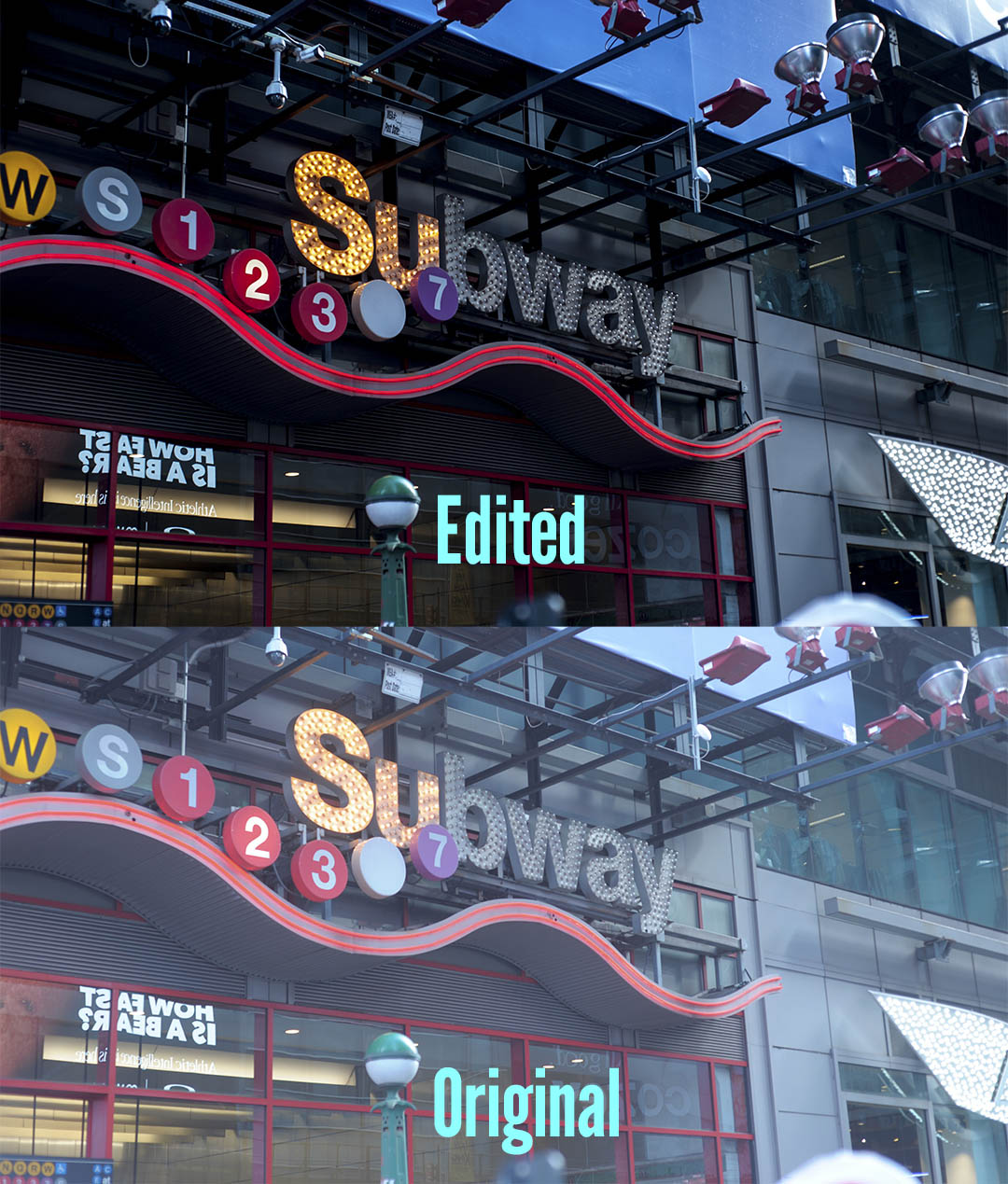
I always recommend that all photographers, even beginners, shoot RAW instead of JPG. Here are my reasons:
Exposure
It happens: you were in a hurry and underexposed your image. It's too dark. But RAW files contain so much information when compared to JPG files that you can lift the exposure without degrading the image quality. Depending on the file and camera used, you may be able to increase the exposure by two or three stops without ruining it.
Color Correction
Fixing white balance issues is very simple in RAW, as well as controlling the hue and saturation levels of individual colors. For example, after white balancing the image, if something in your image is still too red or too yellow you can specifically reduce the saturation levels of those colors, without touching the other colors.
Noise Reduction
RAW files have no noise reduction applied, so you can apply your own. We all hate noise, but sometimes when shooting in JPG, the camera will apply too much noise reduction and make fine details like hair or architectural lines look "mushy". RAW lets you add just the right amount.
Sharpening
As with being able to control the amount of noise reduction applied to the image, you can also control the amount of sharpening. Some JPG settings cause certain images to look oversharpened. In some specific situations, such as portrait photography, you may not want any sharpening at all.
Luminance Channels
My favorite aspect of working with RAW files, since I shoot a lot of scenes with city lights. You can boost or lower the brightness of certain colors of light. For example, if you want to make the red traffic lights in a street scene stronger while reducing the strength of the headlights of cars, you can do that specifically, without brightening or darkening the other light sources in the image.
Future Software
One last interesting thing about RAW is that the software used to edit RAW photos is often being improved upon by software developers. This means that you can go back to your old RAW files months or even years later and extract even more detail. Try loading that old, underexposed file that doesn't look so good through a new RAW converter and play around with it. You may be able to pull out something amazing from it. I certainly have been able to. A JPG on the other hand is basically frozen in time.
Downsides to RAW
There are some downsides to shooting in RAW all the time, and perhaps there will be some situations where you'll choose to shoot in JPG for convenience.
Potential downsides include the fact that all RAW files must be processed in an editor, whereas a JPG is "ready to go" and can be shared instantly using any social media app. In addition, every camera manufacturer uses a different formula for their RAW files, so the software you have may not be able to read a particular manufacturer's RAW format, whereas JPGs can be opened by any editor, even basic editing apps on phones.
Another downside is that RAW files take up much more space on your SD card and hard drive than JPGs. Some RAW files can be huge. If you're running low on storage space, this might be an issue for you.
Questions? Feel free to email me or follow me on Instagram.
All photos in this article were taken at the protest in New York City on March 28th, 2026 using a Nikon D700 and 50mm f1.8D lens.